Wednesday, 21 November 2012

Week Seven: Song Structure Terminology

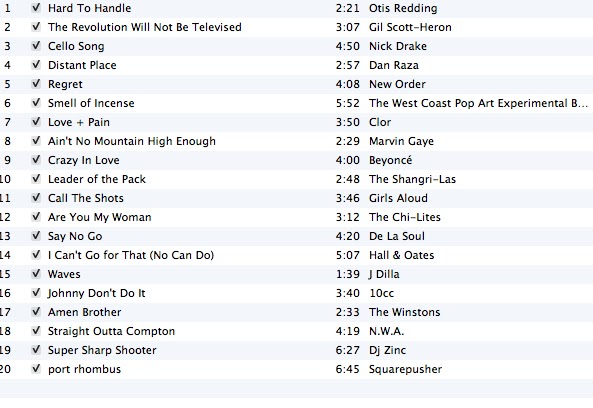
This week we covered song structure and the terms associated with them. The main thing you should able to do is to recognise the different parts of a song (eg verses, choruses, middle eights etc) and to be able to write out the structure of a song using these terms. The structures that we looked at (AA, AB, AABA and ABABCB) are all just examples of commonly used song structures. If you are asked to write out the structure of a song I'd say it would be best to use the actual terms rather than letters. Also try to be as specific as possible- because the term 'bridge' can be used to describe a number of structural elements (pre-chorus, middle 8 and solo) then it is best to use the specific term. So if a section links the verse to a chorus, then it is better described as a pre-chorus (although describing it as a bridge is also correct). A middle 8 is generally a change of key, mood, instrumentation or lyrical perspective and is usually found between the 2nd chorus and 3rd chorus. Again you can use the term 'bridge' though. A solo is usually when an instrument plays over the verse or chorus chords (as in Smells Like Teen Spirit) and probably not best described as a middle 8. This is admittedly a bit confusing so just use your best judgement. If you are able to argue your case convincingly there is always room for debate. Finally it would be good to practice counting the bars in different sections at home, this may well come up in the exam.

Powerpoint slides


Playlist
[Note: not all of these tracks were played during this class due to a lack of time, but if you have time, listen to the rest and try to figure out the structures at home]


Week Six: Naming the Musical Parts (Part 2)

A continuation of last week, all fairly self-explanatory! The recap Powerpoint slide in week 7 should be helpful in summarising the material from this week.

Powerpoint slides


  Playlist


Week Five: Naming the Musical Parts (Part 1)

Weeks 5 covered some of the elements that make up most music (melody, chords etc). There were no Powerpoint slides from week 5 but the recap slide from week 6 covers everything you need to understand from that lesson. The 'graphic score' stuff we did during week 5 isn't part of the curriculum, it was just designed to get everyone thinking about music in a different and more visual way.

 Graphic Score exercise [link for audio samples: http://www.bbc.co.uk/apps/ifl/schools/gcsebitesize/music/quizengine?quiz=notation&templateStyle=music ]


Wednesday, 31 October 2012

Week Four - Identifying Instruments (Part 2)

The week we looked at less commonly used instruments- brass (trumpet, trombone and saxophone), woodwind (flute), strings (cello and violin) and other guitar-like instruments such as the banjo, mandolin and oud. Hopefully that was all straightforward. Again there are photos in the Powerpoint slides and examples in the playlist.

Recent(ish) Innovations in Music

We looked at synthesizers, drum machines and the sampler. In the past few years, drum machines (such as the Roland 808) and the 'classic' synthesizer (such as the Moog) are in one sense becoming less common, and this is in part because we can now sample these instruments and run them from a laptop with a USB controller keyboard. The sounds that they create are arguably as popular as ever however! We also looked at sampling in the original sense, i.e. taking a section of pre-recorded music and incorporating it into your own music. We discussed the creative merit of this approach and whether it merely represented laziness or even theft. I was very interested to hear everyone's opinion on this- I think we mostly agreed that when used with imagination and creativity, making music using samples can be just as valid as using an instrument such as the guitar. For particularly good examples of sample use see the playlist or the following bootleg albums that use samples from The Beatles, Fugazi and The XX and mix them with vocals from Jay-Z, Wu Tang and Notorious BIG respectively (thanks to Jago for the XX heads up). I want to emphasise that these are not merely 'mash-ups' where an instrumental is mixed with anther vocal- rather they are well-crafted mixes using various different elements from the instrumental source tracks. Listening to the Grey Album and trying to spot the samples used from The White Album will be particularly useful in training yourself to hear music in a more analytical way. There were few things I forgot to cover this week- David mentioned that the Beyonce track actually sounds quite 'old school' for a modern R&B recording- if you listen to 'Are You My Woman' by The Chi-Lites (from the playlist) you'll see why! I also mentioned that the use of sampler instruments has made live performances much easier, in that you can carry around hundreds of instruments in one keyboard or laptop. No more using a truck to get a full sized Hammond organ to the venue! Related to this Megan asked a good question about synthesizers using samples at the end which I may have got my wires crossed about. A more complete answer is that synthesizers that are trying to emulate other instruments (such as the piano, organ etc) are usually made using samples of real sounds. However other synthesizer sounds commonly heard in dance music or even the classic Moog sound are more likely to be built from scratch. This would involve the manipulation of sine waves in various ways that are far more advance than we'll be looking at. There is always a bit of grey area with these things and to be honest this isn't something that you need to get too worried about at this stage. I hope that's relatively clear! If anyone has any questions I'll try to answer them next week or you can add comments/questions to these weekly posts.

http://grooveshark.com/#!/album/The+Grey+Album/120338

http://soundcloud.com/wugazi

http://soundcloud.com/wait-what/sets/the-notorious-xx

Playlist

Powerpoint slides


Week Three - Identifying Instruments (Part 1)

This week we looked at the main five groups of instruments: the modern drum kit, percussion, bass, guitar, and keyboards. In various combinations these have made a large percentage of records of the past 50 years. We saw that the 'back beat' drum pattern (kick drum on the 1st and 3rd beat of a 4/4 bar, snare on the 2nd and 4th) is the foundation of many rock records, and has stayed basically the same from Elvis through to more recent bands such as And You Will Know Us By The Trail of Dead. The ability to identify these groups of instruments both visually and by ear is essential to a live sound engineer and tour manager. Some instruments within these groups (such as the Fender Rhodes) are maybe less important to be able to identify than others, but a good knowledge of them will certainly be helpful. The Powerpoint slides will help with being visually familiar and the tracks in the playlist (see below) should help you recognise the sound of them. If you have access to Logic or Garage Band, the sampler instruments included are very helpful in this area (especially the individual parts of a drum kit). At the end we used Logic samples to see which of these instruments worked better in different genres.

Playlist